
Charleston November Outdoor Report: Weather & Water Conditions
November in the Lowcountry brought a true shift toward winter patterns. We saw a mix of crisp mornings in the upper 40s to mid 50s, climbing into the 60s and low 70s on calm, sunny days. Several passing fronts delivered stiff NW and W winds early in the month, followed by more typical NE sea breezes later on.
Water temperatures slid from the low 70s at the start of the month into the upper 50s by Thanksgiving week. Clearer water arrived with the cooler temps, especially on the lower tides, and the bait thinned out dramatically as shrimp and mullet pushed offshore.
Sea Duck Hunting (Scoters, Longtails)
November delivered classic early-season sea duck action outside the jetties and along the nearshore rock structure. Large rafts of surf and black scoters pushed into the area with each cold front, and birds worked long-lines well on calmer mornings.
On rougher days, the birds tended to skirt closer to the rock wall, using the lee water behind the jetties for travel lanes. Gappers and singles were common, and birds usually committed tight when the wind was NW–NE at 10–15. Action increased noticeably as water temps dipped into the 50s.
Diver Duck Hunting (Bufflehead, Redheads, Bluebills)
Small groups of Bufflehead showed up by mid-month, especially around protected coves, marsh creek mouths, and inside the harbor on calm tides. Redheads and bluebills were spotty but present in traditional wintering zones—mostly tied to the harbor edges and deeper river channels. A strong negative-tide morning paired with light winds provided the best decoying opportunities.
Long-line spreads with wider spacing (8–10 ft) and a small pocket upwind pulled birds in consistently.
Puddle Duck Hunting
Gadwall, teal, and wigeon trickled in with the first big cold snaps. Action was best on the higher tides when birds could push deep into the grass edges. Early morning north winds after a front made ducks fly lower and more predictably.
Wood ducks stayed reliable in the backwaters, and the first gadwall groups of winter showed up on larger impoundments and open marsh ponds.
Redfish
The dropping water temps pushed reds into tight low-tide schools across the harbor, IOP, Awendaw, and Bulls Bay. Clear water made sight-fishing excellent on negative tides.
In the creeks, reds responded well to:
Z-Man paddle tails
Shrimp patterns and small crab flies
Flood tides tapered off by mid-month, but a few tailers showed themselves on warmer evenings.
Speckled Trout
Trout fishing fired up as expected. The best bite came around creek mouths, shell rakes, and deeper bends on moving water.
Top producers:
1/8–¼ oz jigheads with paddle tails
MirrOlures on sunny afternoons
Clouser minnows and EP baitfish flies
Most fish were in 3–6 feet, but some bigger trout were caught deeper after the fronts.
Black Seabass
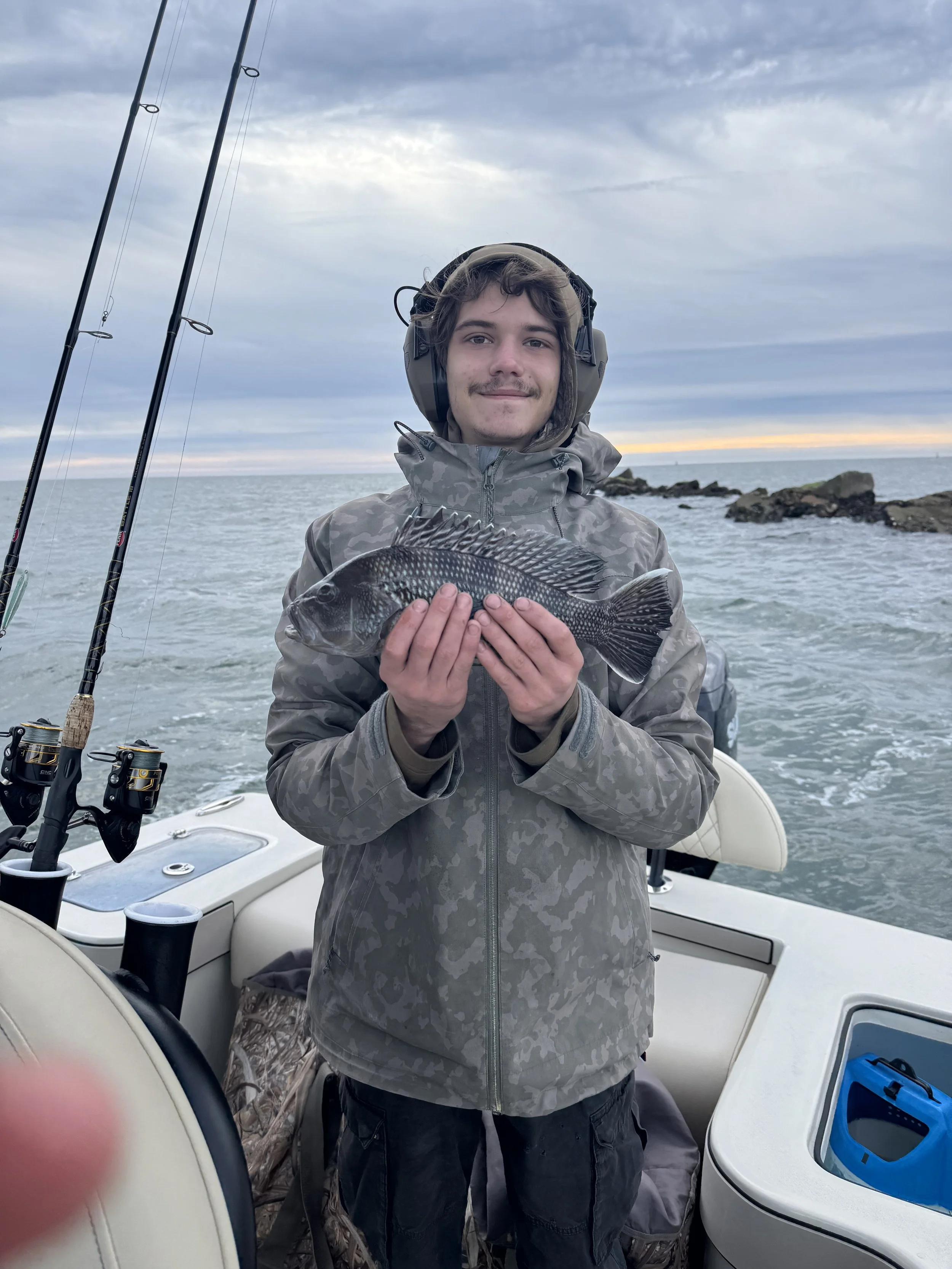
Sea bass stacked on nearly every nearshore reef and ledge this month. Any small piece of structure from 3–10 miles out held fish. Keepers were mixed in with plenty of shorts, but action stayed steady.
Cut bait, live bait, and small bucktail jigs all produced. On days with calmer seas, fly anglers were able to get bit on sinking lines and small chartreuse flash flies.
Sheepshead & Nearshore Mixed Bag
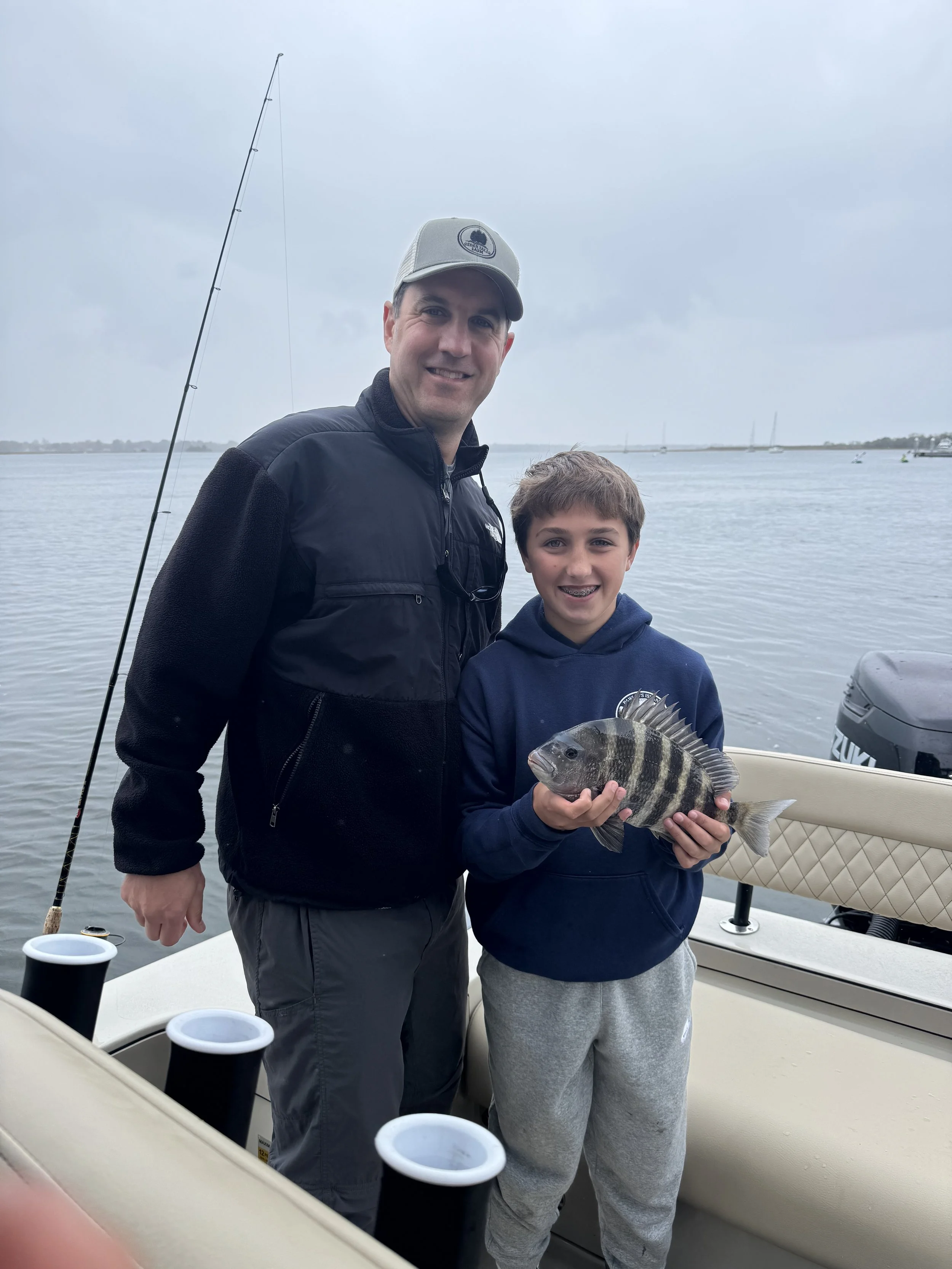
Cooler water brought sheepshead tight to docks, bridge pilings, and nearshore rock piles.
Inshore fishermen also picked up:
Weakfish
Bluefish
The occasional flounder on warmer stretches
The nearshore reefs held big bull reds late into the month whenever the baitfish pushed offshore.
Looking Ahead
December typically brings:
Larger sea duck numbers as more cold pushes down
Growing diver activity inside the harbor
Heavy schooling behavior from redfish on low tides
Some of the best trout fishing of the year
Sea bass remaining consistent through early winter