
The Future of Fishing: What It Might Look Like in 20 Years
Fishing has always lived at the intersection of tradition and innovation. From handlines and wooden skiffs to GPS chartplotters and modern fly rods, anglers have constantly adopted new tools while still relying on timeless instincts. Looking twenty years ahead, fishing could change dramatically as technology continues to evolve—but the core of the sport will likely remain the same.
Here’s a look at what fishing might realistically look like two decades from now.
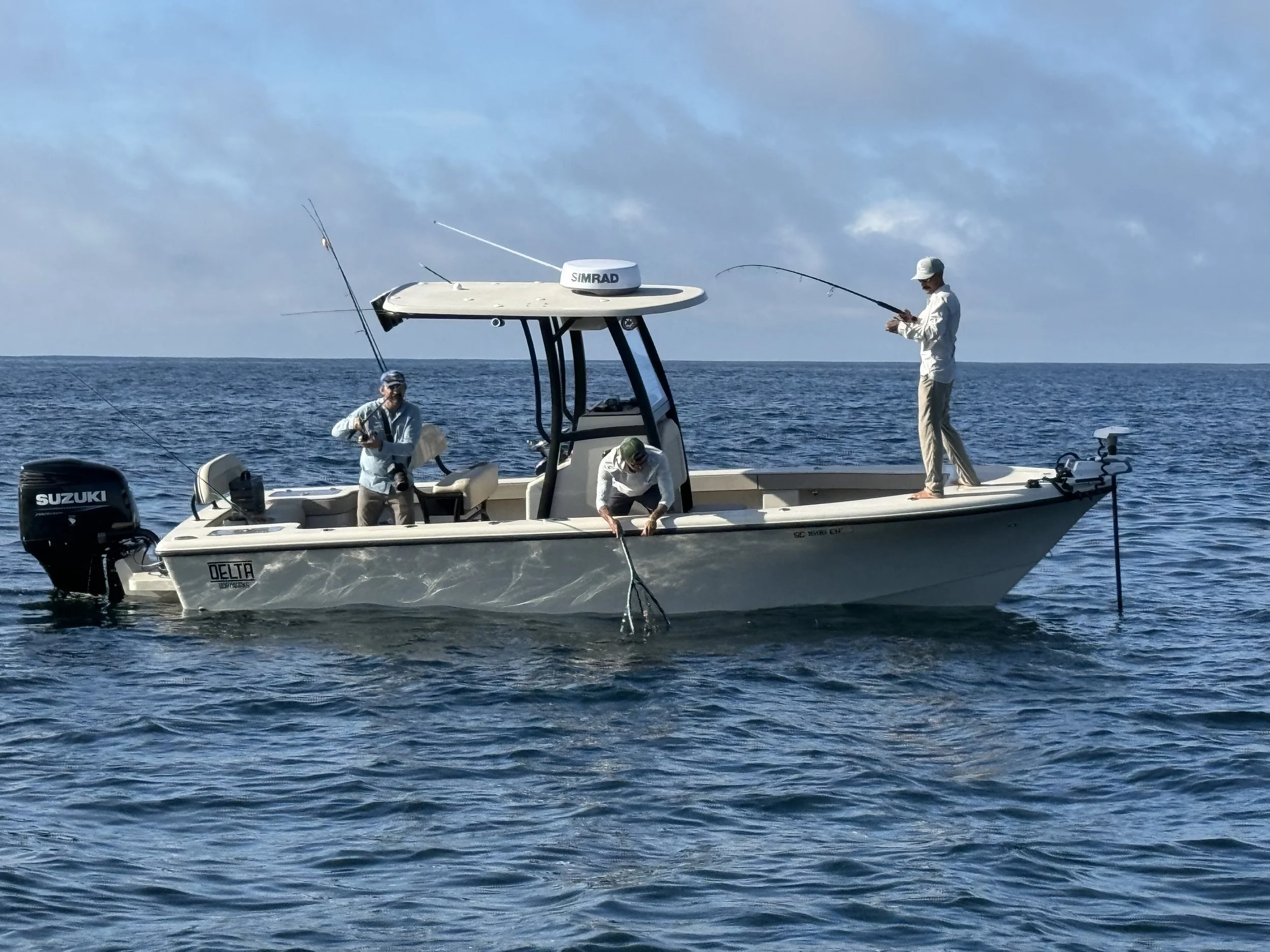
AI That Predicts Where Fish Will Be
Right now, anglers already rely on apps that combine weather, tides, and catch reports to help plan trips. In the future, artificial intelligence could take this much further.
Apps similar to Fishbrain or Navionics could eventually integrate satellite imagery, ocean temperature data, fish tagging information, and millions of angler reports to create real-time predictive models.
Instead of guessing where fish might be, anglers might open an app and see:
A predicted migration path of bait schools
Exact bite windows based on tide movement
Suggested flies or lures for current conditions
Imagine a notification that says:
“False albacore expected to push within casting distance of the beach at 7:45 AM.”
For offshore anglers and guides, this kind of technology could completely change how time on the water is spent.
Drones That Find Fish
Another major shift could come from autonomous drones designed specifically for fishing.
Companies like DJI have already pushed drone technology far enough that aerial scouting is possible today. In the future, drones could launch directly from a skiff and scan the surrounding water using high-resolution cameras and artificial intelligence.
A drone might:
Scan a one-mile radius around the boat
Identify bait schools or breaking fish
Send live video to a phone or chartplotter
Instead of running miles searching for birds or nervous water, anglers could deploy a drone for a few minutes and know exactly where to go.
Smart Rods and Data-Tracking Gear
Fishing gear itself may become a source of data.
Future rods and reels could include built-in sensors that measure tension, drag pressure, and fight duration. That information could sync directly with a phone or boat electronics.
Brands like Shimano or marine electronics companies like Garmin may eventually integrate fishing gear with onboard systems.
Your rod could potentially tell you:
How much pressure a fish is pulling
The estimated size of the fish
Fight time and drag performance
Each catch could automatically be logged, creating a detailed history of fishing trips over time.
Augmented Reality on the Water
In the next twenty years, augmented reality could become part of the fishing experience.
Lightweight AR glasses—technology currently being developed by companies like Apple and Meta—might eventually function as high-tech fishing sunglasses.
While looking across the water, anglers could see:
Depth contours projected onto the surface
Sonar returns visualized in real time
Underwater structure outlines
Fish movement predictions
Imagine sight-fishing on a flat while a heads-up display quietly shows where drop-offs and oyster bars sit beneath the surface.
Silent Electric Boats
Boats themselves may change just as dramatically.
Electric propulsion is already improving rapidly, and within a few decades many skiffs could be completely electric and nearly silent. Combined with advanced GPS positioning, boats may also become semi-autonomous.
Early versions of this already exist in systems like Minn Kota Spot-Lock.
Future boats could:
Hold a perfect drift along a shoreline
Maintain casting distance from fish automatically
Follow a programmed path across a flat
For guides and anglers alike, that could mean less time adjusting position and more time casting.
Global Fish Tracking
Marine scientists are also tagging more fish every year. In the future, tagging technology may become small and inexpensive enough that millions of fish carry tiny tracking devices.
Species like:
Red Drum
Spotted Seatrout
False Albacore
could be monitored in real time as they migrate, spawn, and move between habitats.
Anglers might have access to broad movement maps showing seasonal patterns across entire coastlines.
This could help both fishermen and conservationists better understand and protect fisheries.
Technology and Conservation
With greater technological power may also come stronger conservation measures.
Future regulations could include:
Mandatory digital catch reporting
Real-time harvest tracking
Automated monitoring of released fish
While that might feel restrictive to some anglers, it could also help ensure fisheries remain healthy for future generations.
The Rise of “Analog” Fishing
Ironically, as fishing becomes more technological, a counterculture will likely grow alongside it.
Many anglers will seek experiences that reject electronics altogether—much like the revival of vinyl records in the music world.
We may see more:
No-electronics tournaments
Traditional skiff fishing
Sight-fishing competitions where technology is banned
For many anglers, the challenge and mystery of fishing are exactly what make it meaningful.
The One Thing That Won’t Change
No matter how advanced fishing technology becomes, the most valuable skill will probably remain the same: understanding the water.
Knowing how tides move through marsh grass, how bait behaves before predators arrive, and how fish respond to changing conditions will always matter.
Technology may help anglers find fish faster, but the art of fishing—presentation, timing, and instinct—will still separate great fishermen from everyone else.
Twenty years from now, fishing may look very different on the surface. But at its heart, it will still be about the same thing it has always been: a person, the water, and the hope that something wild is about to bite.