
Fly Fishing for Nearshore Cobia in Charleston, South Carolina
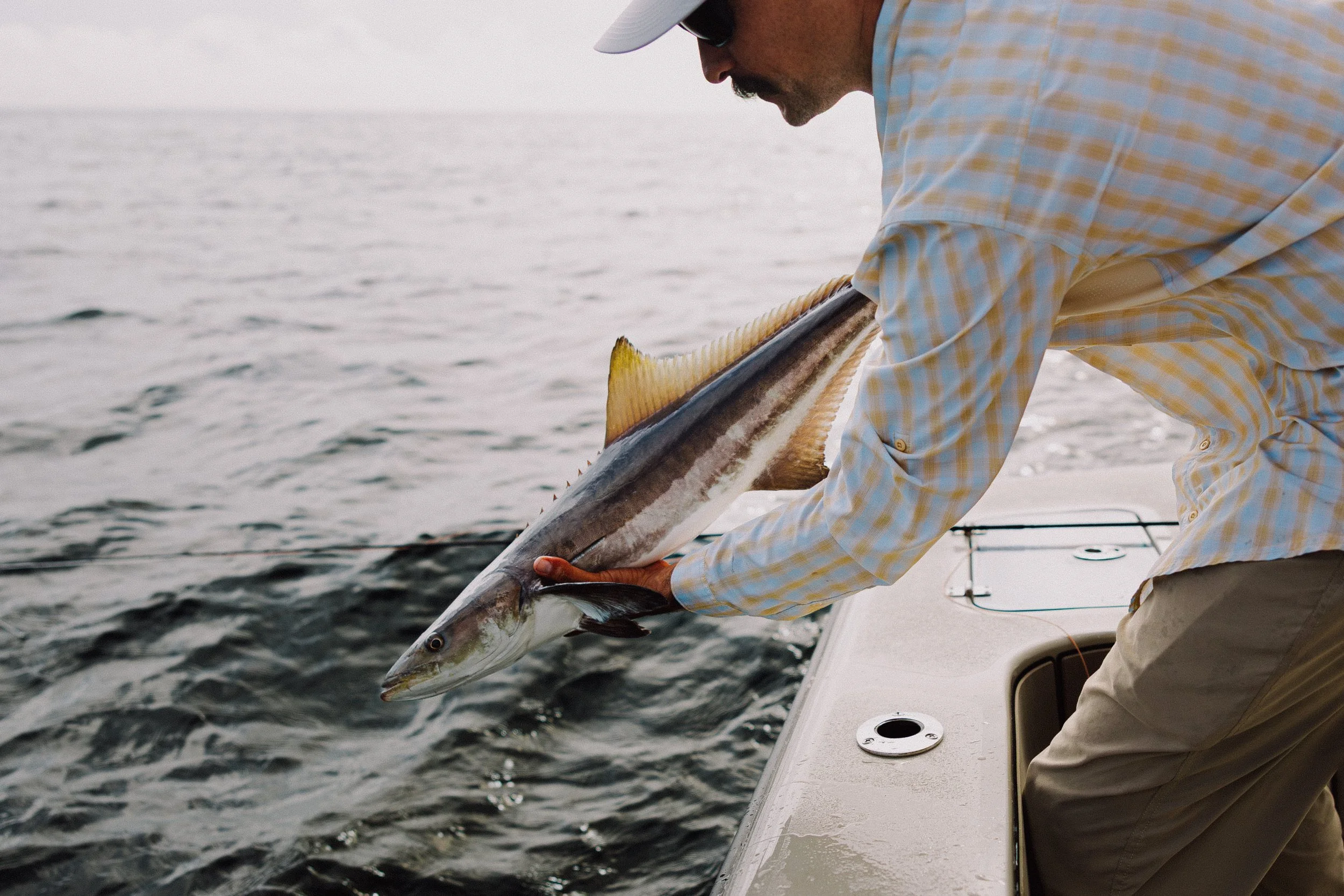
Every spring and early summer, one of the most exciting sight-fishing opportunities on the East Coast shows up just off the beaches of South Carolina. Cobia migrate along the coastline following bait, sharks, turtles, and warming water temperatures, giving fly anglers an incredibly visual fishery that combines hunting, casting, and high-pressure fights.
Unlike blind casting for many saltwater species, nearshore cobia fishing is all about finding the fish first. The better you can locate and elevate cobia in the water column, the better your chances become with a fly rod.
When Cobia Arrive
South Carolina’s cobia season usually begins sometime in April when water temperatures creep into the upper 60s. The bite generally improves through May and June before fish spread farther offshore later in summer.
The best conditions for fly fishing are:
Light wind
Clean green or blue water
Moderate seas
Bright sunlight for visibility
Calm mornings are especially productive because visibility becomes everything when hunting cobia on fly.
Where to Look for Nearshore Cobia
In South Carolina, most nearshore cobia are found around:
Nearshore reefs
Artificial reefs
Navigation buoys
Channel markers
Bait schools
Color changes and temperature breaks
Sharks and sea turtles
While some cobia cruise high in the water column, many suspend deeper and never become visible unless you actively pull them up.
That’s where good tactics separate average days from great ones.
How to Bring Cobia to the Surface
One of the biggest mistakes anglers make is assuming no fish are around just because they don’t immediately see them. Many cobia travel deeper beneath the boat and can often be teased upward.
Chumming with Live or Cut Bait
One of the most effective ways to raise cobia is by creating a steady chum line.
Good options include:
Cut menhaden
Cut mullet
Live pogies
Chopped blue runners
Rather than dumping large amounts at once, feed the water slowly and consistently. Suspended cobia often rise through the water column investigating scent and flashing bait pieces.
Once a fish appears, keep the chum going but avoid chaos on deck. Cobia can spook surprisingly easily in clear shallow water.
Using a Teaser Rod
A spinning rod rigged with a large bucktail, eel, or soft plastic can pull fish up from deeper water.
Common teaser techniques include:
Fast upward retrieves
Figure-eight motions beside the boat
Long sweeps near structure
Repeated drops beside sharks or buoys
Many experienced cobia fly anglers use conventional tackle first to “show” themselves the fish before presenting the fly.
Once the cobia commits visually, remove the teaser quickly and drop the fly into its line of sight.
Stop on Sharks and Turtles
One of the most consistent cobia patterns is fish shadowing large sharks or sea turtles.
If you spot a shark but don’t immediately see cobia:
Stop well ahead of it
Toss a few bait chunks
Let the shark drift toward the boat
Cobia frequently materialize from underneath sharks after a few minutes of chumming.
Structure Hopping
Nearshore reefs and navigation markers often hold fish that sit deeper than visible range.
A productive tactic is:
Pull up quietly
Begin a light chum slick
Watch for 5–10 minutes before leaving
A lot of anglers move too quickly. Suspended cobia may take several minutes to rise.
Best Fly Tackle for Cobia
Cobia are incredibly strong fish that demand serious gear.
Rods
10 to 12 weight fly rods are ideal
Fast-action rods help throw large flies in wind
Longer rods help with boat-side control
Reels
Use large arbor reels with:
Strong sealed drags
At least 250 yards of backing
Corrosion resistance
Cobia regularly make long runs and are notorious for chaotic circles near the boat.
Fly Lines
Most anglers carry:
Floating lines for sight-fishing surface fish
Intermediate lines for deeper fish
Floating lines are preferred when fish are actively cruising or feeding high in the column.
Best Flies for Nearshore Cobia
Cobia are aggressive but can also become frustratingly selective.
Top patterns include:
Large Deceivers
EP baitfish patterns
Black/purple flies
Chartreuse and white baitfish flies
Crab patterns
Eel imitations
Most flies should be tied on strong 3/0–5/0 hooks.
A common mistake is throwing flies that are too small. Cobia are used to eating large prey and often respond better to substantial profiles.
Presentation Matters More Than the Fly
The cast is everything with cobia.
Never land the fly directly on the fish’s head. Instead:
Lead the fish by several feet
Strip aggressively at first
Slow down once the fish tracks
Keep the fly moving
Cobia often follow before committing. Sudden pauses can trigger the eat.
If the fish loses interest, speed the fly up dramatically before giving up.
Boat Positioning Tips
Good boat control is critical for fly fishing cobia.
Key points:
Keep the sun at your back when possible
Stay elevated for visibility
Approach slowly from ahead of moving fish
Avoid excessive trolling motor noise in shallow clean water
Many successful cobia anglers spend more time searching than casting.
Why Fly Fishing for Cobia Is So Addictive
Few saltwater fly fishing experiences compare to watching a large cobia rise through a chum slick or suddenly appear behind a shark in clear water. The visual aspect, the challenge of making the right cast, and the chaos that follows the eat are what make cobia such an exciting species on fly tackle.
Some days involve hours of searching before a fish finally materializes beneath the boat. Other days, cobia seem to appear out of nowhere behind a buoy or under a shark.
That unpredictability, combined with the power of a cobia on a fly rod, is what keeps anglers coming back every season.